If you are a principal contractor in Ireland and you hire subcontractors, RCT is not a single button in ROS. RCT for principal contractors is a chain: the contract, the notification to Revenue, the payment, the paperwork for the subcontractor and the return. If even one link is missed, problems can arise for both you and the subcontractor.
What RCT is and who counts as a principal contractor
RCT (Relevant Contracts Tax) is a tax deduction system used in the construction, forestry and meat processing sectors. A principal contractor paying a subcontractor under a so-called relevant contract must use the eRCT system on ROS (Revenue Online Service) and, where Revenue says so, deduct tax.
You do not have to be a large construction company to be a principal contractor. If you are a Sole Trader builder and you pass part of a job to another tradesperson, you are usually the principal contractor in relation to them. You will find a general overview of the system in our article how RCT works in Ireland.
Before you sign the contract
The most important questions are settled before work begins:
- Is it a relevant contract, that is, does the work fall within the scope of RCT?
- Is it genuinely a subcontracting relationship and not employment? If the person essentially works as your employee, they must be on payroll, not RCT.
- Do you have the subcontractor’s details for the eRCT notification: name or company name, tax reference number, contact details, description of the work, location, and estimated value and duration?
- Are you registered with Revenue as a principal contractor?
The line between employment and self-employment is a sensitive one: Revenue looks at the real situation, not at what the relationship is called in the contract. When you submit a contract notification, you confirm that it is not a contract of employment.
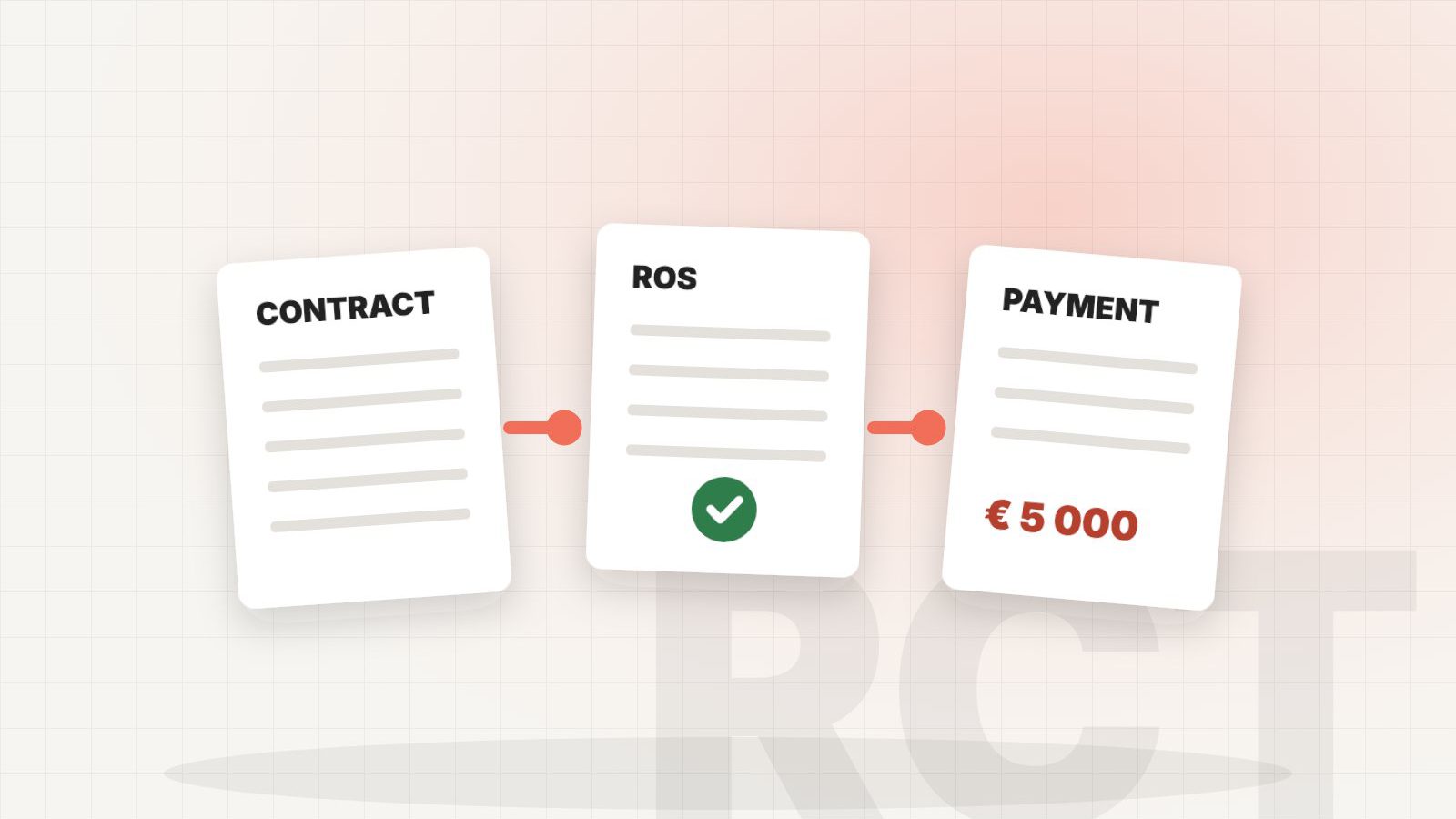
RCT for principal contractors, step by step
- Contract notification. Before the first payment to the subcontractor, you notify the contract through eRCT.
- Payment notification. Before each payment, you state the gross amount you intend to pay.
- Deduction authorisation. Revenue replies with the RCT rate to apply and how much to deduct.
- Payment. You pay the subcontractor the amount after the deduction.
- Paperwork for the subcontractor. If tax has been deducted, you give the subcontractor a copy of the deduction authorisation.
- Return and payment to Revenue. Revenue prepares a summary for the period based on your notifications; you check it, amend it if needed and pay the RCT deducted.
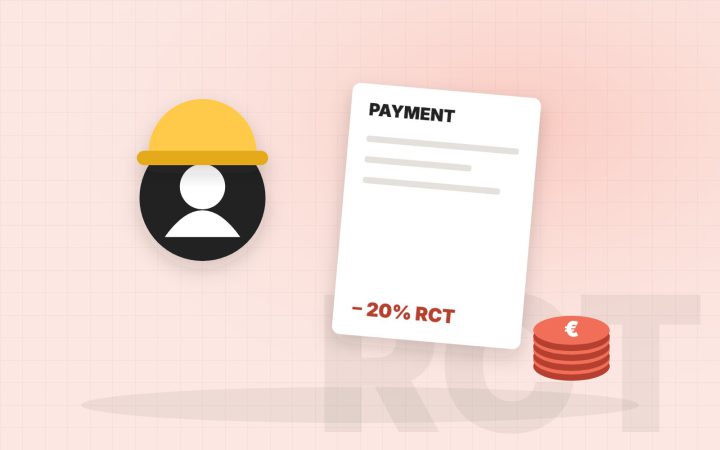
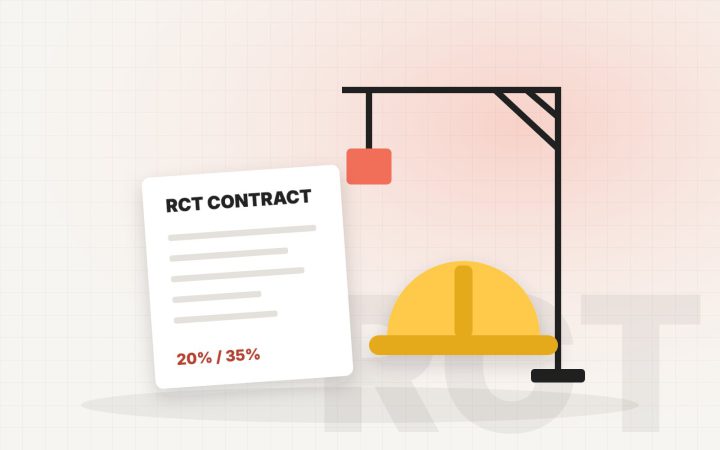
At present the RCT rates are 0%, 20% and 35%. Revenue decides which applies based on the subcontractor’s tax compliance, so always take the rate from the deduction authorisation, not from what the subcontractor tells you. Check the return frequency and deadlines in ROS or on revenue.ie.
Paying a subcontractor: a practical example
Example (illustrative): a subcontractor has done work worth €10,000. Before paying, you submit a payment notification, and Revenue’s deduction authorisation shows a 20% rate. You transfer €8,000 to the subcontractor, give them a copy of the deduction authorisation, and pay €2,000 to Revenue as RCT. If the authorisation showed 0%, you would transfer the full €10,000, but you would still have to submit the payment notification.
If the work is paid in stages, for example monthly based on a valuation of work done, a payment notification is submitted before each stage payment, not once for the whole contract. The same goes for advances: if you pay a subcontractor upfront, that is also a payment that must be notified. Note that you notify the gross amount, not the net amount. Also, construction work between contractors is usually subject to the VAT reverse charge – there will be no VAT on the subcontractor’s invoice, and you will account for the VAT yourself.
The bookkeeping side
In your books, subcontractor costs must be shown at the full amount, and the liability split into two parts: the net payment to the subcontractor and the RCT portion owed to Revenue. If your books only show the bank transfer, the costs will be understated and the RCT liability will be invisible. Then both your profit and VAT figures start to drift.
Keep contracts, subcontractor invoices, proof of payment and deduction authorisations. If Revenue carries out an audit, these will be needed first.
A monthly routine for contractors
In practice, a steady rhythm works best. Every time before you pay a subcontractor, you submit a payment notification and save the deduction authorisation. At the end of the period, you review the summary Revenue has prepared in ROS: are all payments included, are the amounts correct, and are there any payments that were notified but never actually made? If needed, you amend the summary, confirm it and pay the RCT by the deadline.
At the same time, it is worth reconciling RCT with your books: the gross amount for each subcontractor in your books should match the amount in your eRCT notifications. If a subcontractor has corrected an invoice or issued a credit note, this must also be reflected in eRCT. It is also important to notice in good time when a contract ends or a new one starts, as each new contract needs its own notification.
If your business also has employees, do not confuse RCT with payroll: they are separate systems with different obligations and returns.
Common mistakes
- Paying the subcontractor before submitting the payment notification.
- Notifying the net amount instead of the gross amount.
- Applying the rate “the subcontractor told me” instead of the one on the deduction authorisation.
- Not giving the subcontractor a copy of the deduction authorisation.
- Not checking or amending the period summary.
- Applying RCT to someone who is actually an employee.
Quick answers
Do I need to notify a payment if the subcontractor’s rate is 0%?
Yes. A payment notification is submitted before every payment, whatever the rate.
What happens if I paid without notifying?
This is a breach of the RCT rules and penalties may apply. The situation needs to be dealt with as quickly as possible, ideally with an accountant.
Can Revenue change a subcontractor’s rate during a contract?
Yes, Revenue reviews rates. That is why you should always go by the most recent deduction authorisation.
A clear RCT process from contract to payment protects both you and your subcontractors. Always check the current rules on revenue.ie.
If you need help with your own situation, see our RCT in Ireland service or get in touch.
This article provides general information, not individual tax advice. Rules change — talk to us about your own situation or check the official Revenue information.