In the construction supply chain, VAT often does not work the usual way – do the job, add VAT and get paid. When a subcontractor works for a principal contractor, the VAT reverse charge for construction applies in Ireland: the obligation to account for VAT passes from the supplier to the customer. If you do not know this, an invoice can be issued incorrectly, and the mistake only comes to light when both sides have to fix it.
What the reverse charge is and who it applies to
Reverse charge means that VAT is accounted for not by the person providing the service, but by the person receiving it. In construction, this is linked to RCT (Relevant Contracts Tax): it applies when a subcontractor carries out construction operations for a principal contractor under a contract that falls within RCT.
In practice it looks like this:
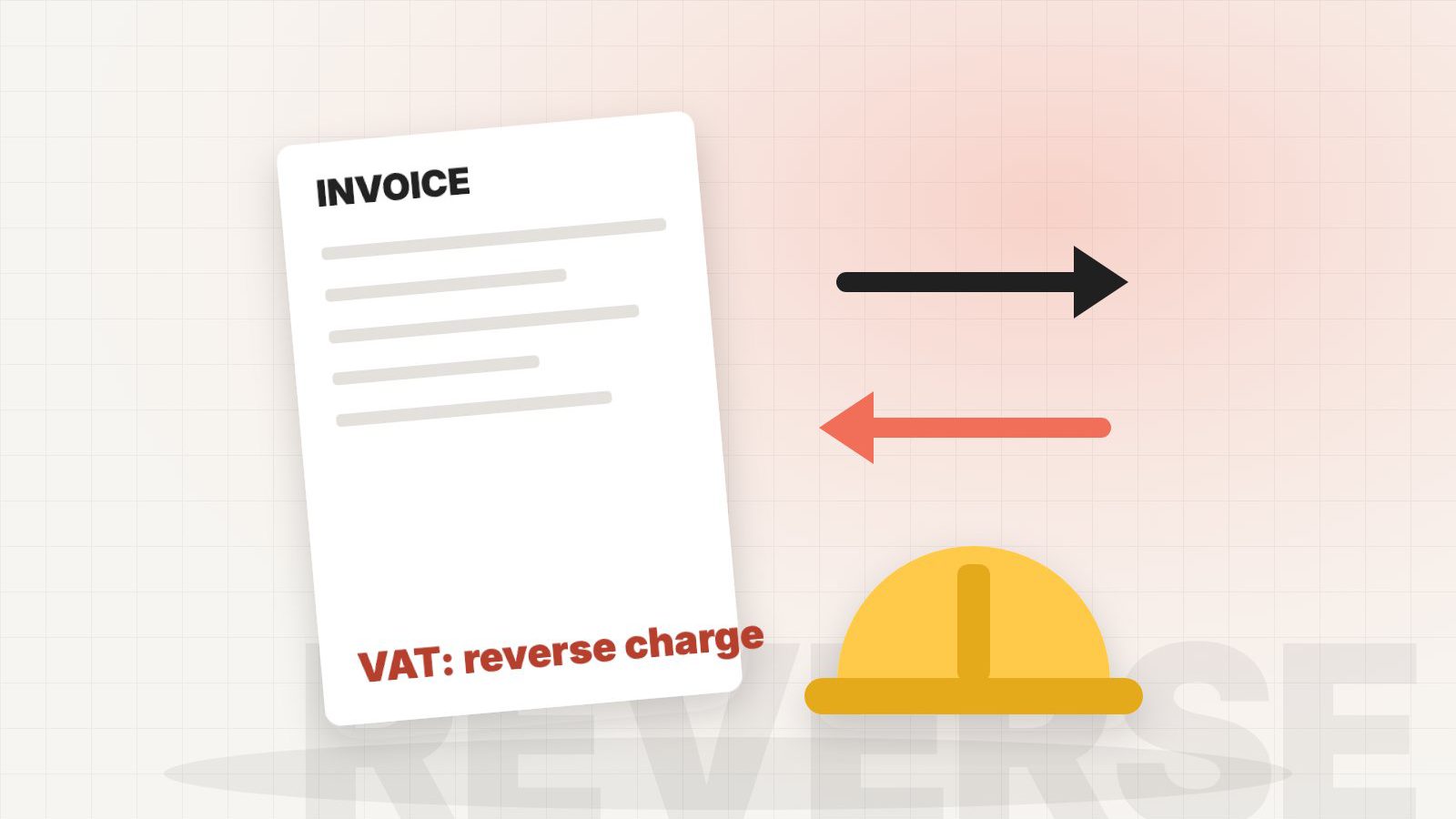
- the subcontractor issues an invoice with no VAT amount;
- the invoice states that the principal contractor accounts for the VAT on this service;
- the principal contractor declares VAT on the service received in their VAT3 return and, if entitled, deducts the same amount.
Important: the reverse charge does not apply when you work directly for a private homeowner who is not a principal contractor. In that case, if you are registered for VAT, you charge VAT on the invoice in the normal way.
Why it matters to both sides
If a subcontractor charges VAT on an invoice when the reverse charge should have applied, the principal contractor cannot deduct that VAT, while the subcontractor has to pay it over to Revenue. You end up with money paid in error that has to be recovered, and disputes over who owes whom.
The reverse is also true: if the principal contractor does not account for VAT under the reverse charge, their VAT3 return will be inaccurate. Even if the final amount payable often does not change (the VAT is declared and deducted at the same time), Revenue treats it as an error during an audit.
VAT reverse charge in construction: what to do before work starts
Settle the reverse charge question before the first invoice, not after the fact. A sensible order:
- Find out whether your customer is a principal contractor for RCT purposes and whether the work counts as construction operations under RCT.
- Check whether the contract has been notified through the eRCT system on ROS (Revenue Online Service) – a good sign that the transaction falls under RCT and the reverse charge.
- Agree what the invoice will show: no VAT amount, with a clear statement that the principal contractor accounts for the VAT.
- If you are unsure whether this treatment applies to particular work, talk to your accountant before you start.
A practical example
Example (simplified, illustrative): a subcontractor carried out construction work worth €10,000 and invoiced the principal contractor without VAT. Construction services are currently most often subject to the 13.5% VAT rate (check the rate on revenue.ie, as it depends on the type of work). The principal contractor enters €1,350 as VAT payable in their VAT3 return and, if they have full deduction rights, the same amount as deductible VAT. The net effect on their payment is zero, but both lines must be completed. The subcontractor does not declare VAT on this invoice in their own VAT3 return, but can still deduct VAT on their purchases – materials, tools, transport.
RCT and VAT together
In construction, RCT and VAT questions almost always come as a pair, but they are different taxes. RCT is an income tax deduction from payments to a subcontractor, while the reverse charge is a way of accounting for VAT. One does not replace the other: a properly notified RCT contract does not mean the VAT is sorted, and vice versa.
Subcontractors should know one more thing: because they do not charge VAT to the principal contractor but do pay VAT on materials, their VAT3 returns often show a refund due. This is normal, but Revenue may look more closely at such returns, so purchase invoices need to be in order. Read more about RCT in our article how RCT works in Ireland.
How it looks in the books and the VAT3 return
In the principal contractor’s books, the subcontractor’s invoice is recorded as a cost without VAT, and the reverse charge VAT is calculated separately. In the VAT3 return, this amount goes into box T1 (VAT on sales and self-accounted VAT) and, if deduction is allowed, into box T2 (deductible VAT). If the principal contractor has only partial deduction rights – for example, because part of their business is exempt from VAT – the final figure will no longer be zero, so it is worth leaving the calculation to an accountant.
In the subcontractor’s books, the invoice is recorded as income without VAT. It helps to have a separate VAT code for reverse charge sales in your accounting software, so that at year end it is clear which sales were taxed normally and which were not. This also makes the annual Return of Trading Details (RTD) easier, as it breaks down sales and purchases by rate.
Both sides benefit from reconciling invoices regularly: the amounts the subcontractor invoiced should match what the principal contractor notified through eRCT and recorded in their books. Differences spotted within a month are easy to fix; spotted a year later, they are much harder.
Common mistakes
- The subcontractor adds VAT to the invoice to the principal contractor “just in case”.
- The reverse charge is applied to work for a private client who is not a principal contractor.
- The principal contractor fills in only the deductible VAT line and does not declare the VAT payable.
- The invoice does not state that the principal contractor accounts for the VAT.
- Assuming that once RCT is sorted, the VAT question takes care of itself.
Quick answers
Can a subcontractor using the reverse charge deduct VAT on materials?
Yes, if they are registered for VAT and the purchases relate to their taxable business. The reverse charge only changes who accounts for VAT on their service.
What if the invoice has already been issued with VAT?
Usually it needs to be corrected with a credit note and a new invoice issued. How to reflect this in the VAT3 returns is best discussed with an accountant, so that both sides correct their records in the same way.
Does the reverse charge apply if I work directly for a homeowner?
Usually not, because a private homeowner is not a principal contractor. But situations vary, so if your customer is a company or a developer, it is worth checking.
If you are not sure whether the VAT reverse charge for construction applies to your contract, it is better to find out before you issue the first invoice. Always check the current rules on revenue.ie.
If you need help with your own situation, see our VAT accounting in Ireland service or get in touch.
This article provides general information, not individual tax advice. Rules change — talk to us about your own situation or check the official Revenue information.