Many small businesses prepare their VAT3 return on the last day, looking at a bank statement. But a VAT3 return has to be based on invoices and the correct classification of transactions, not just on money moving through the account. This article sets out a practical routine for preparing it without rushing and without mistakes.
What VAT3 is and when it is filed
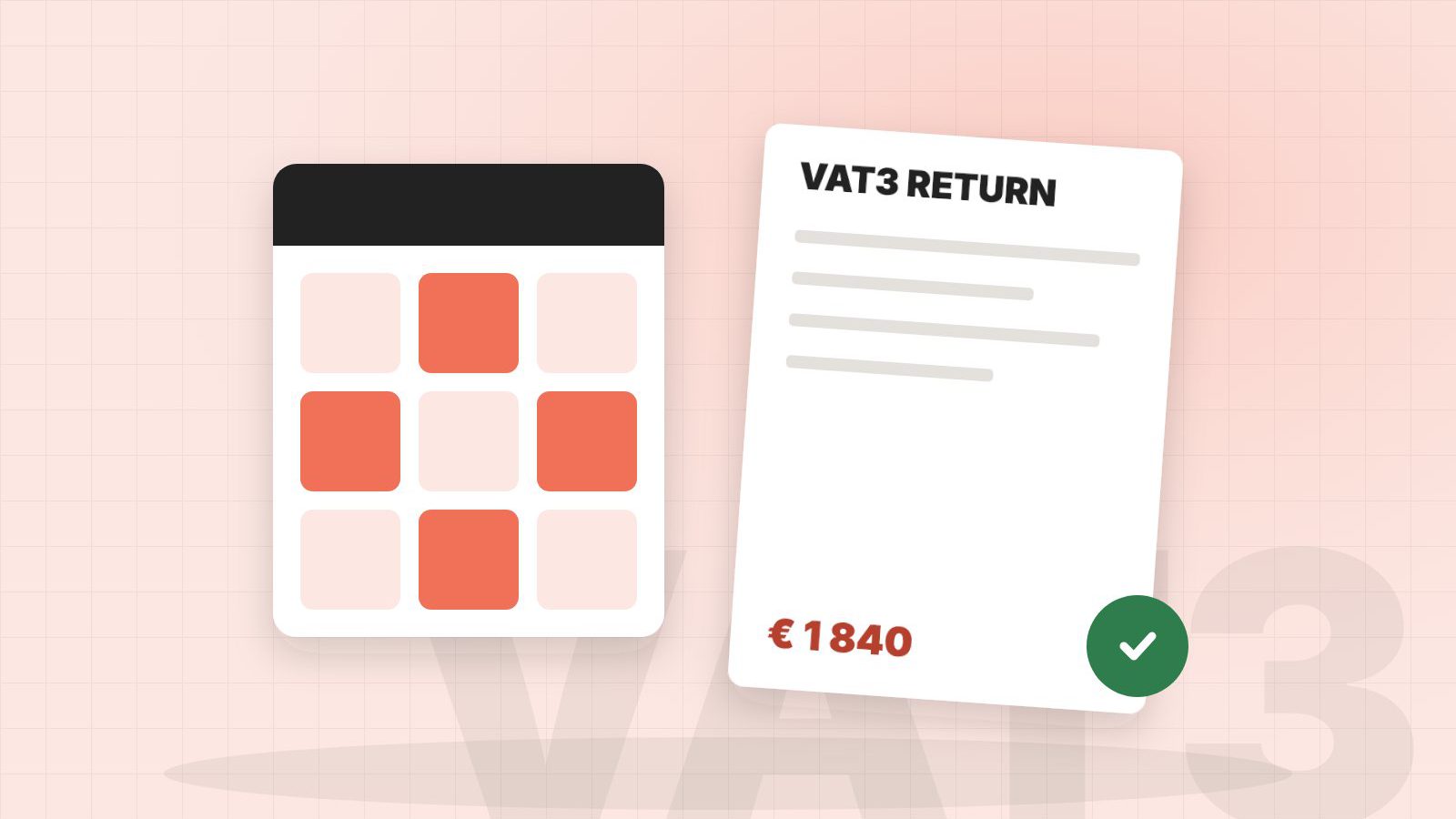
VAT3 is the periodic VAT return that every VAT-registered business files with Revenue. It shows how much VAT you charged on sales, how much you can deduct on purchases, and the amount payable or repayable. The return is filed and paid through ROS (Revenue Online Service).
At present the standard VAT3 period is two months (January–February, March–April and so on). When filing through ROS, the deadline is usually the 23rd day of the month after the end of the period. Revenue may allow you to file less often – for example, every four or six months or once a year, depending on the amount of VAT payable. Check the deadlines and your own filing frequency in ROS or on revenue.ie.
Separately, once a year you file the Return of Trading Details (RTD) – an annual summary that breaks down sales and purchases by VAT rate.
What you need before filing a VAT3 return
Before filling in the return, gather the following:
- a sales record with all invoices and credit notes for the period;
- a purchases record with VAT invoices that meet the requirements (supplier’s VAT number, date, VAT amount);
- details of purchases and sales of goods and services within the EU, if you had any;
- import documents for goods from outside the EU;
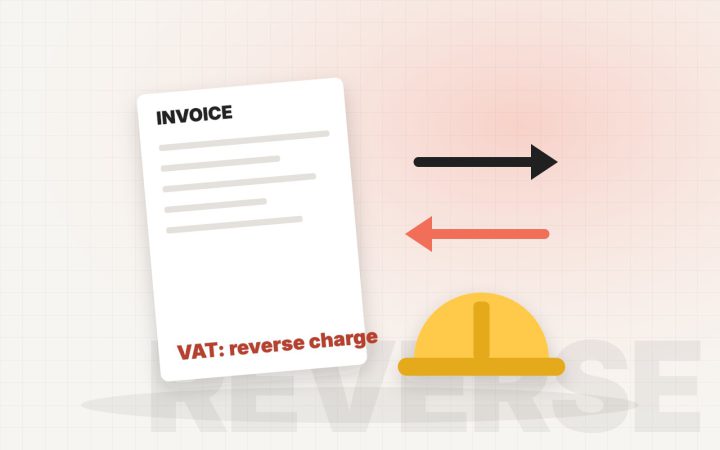
- reverse charge transactions, for example in construction;
- a bank statement reconciled with your books.
Checks before you submit
Before you click “submit” in ROS, it is worth running a few simple checks. Are all sales invoices for the period included, and is the numbering unbroken? Is every purchase invoice you are deducting VAT on really issued to your business, and does it show the supplier’s VAT number? Are EU transactions entered in the right boxes rather than lumped into the totals? Is income received in cash included in your books?
It also helps to compare this period’s figures with previous ones. If turnover is similar but the VAT payable has suddenly halved, that is a sign something has been missed or entered incorrectly. Equally, if a repayment is due, find out why – for example, a large equipment purchase. Revenue may look more closely at VAT3 returns showing a repayment and ask for copies of invoices, so keep your documents to hand.
Finally, plan the payment: you have usually already collected the VAT from your customers, so it is worth keeping it separate rather than using it for day-to-day costs.
Why a bank statement is not enough
A bank statement shows that money came in or went out, but it does not show what VAT rate applies to a transaction, whether it was an EU purchase, or whether an expense gives a right to deduct VAT at all. Also, most businesses account for VAT based on the invoice date, not the payment date – so an invoice issued at the end of the period but paid later still belongs to this period.
Revenue allows some smaller businesses to account for VAT on the money received (the cash receipts basis), but only if they meet the conditions and have been authorised. Which basis you use must be clear before you fill in the return.
The main VAT3 boxes
- T1 – VAT on sales (including reverse charge and EU purchases where you account for the VAT yourself);
- T2 – deductible VAT on purchases;
- T3 or T4 – the amount payable or repayable;
- E1, E2, ES1, ES2 – transactions in goods and services with other EU countries.
A practical example
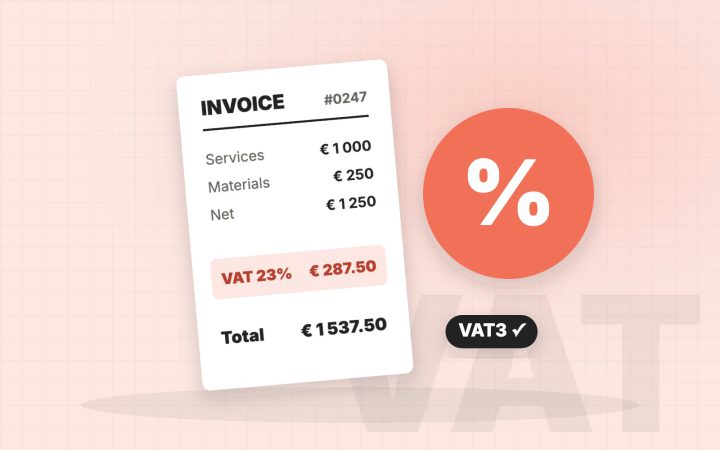
Example (illustrative): over a two-month period you issued invoices worth €20,000 excluding VAT. Your services are subject to the standard rate, currently 23%, so the VAT charged is €4,600 (T1). In the same period you received supplier invoices with €1,800 of deductible VAT (T2). The amount payable is €2,800 (T3). If your bank shows that customers have paid only €15,000 so far, that does not change the VAT3, as long as you account on an invoice basis.
Common mistakes
- Using the wrong VAT rate – especially when the business makes several kinds of sales.
- Handling the reverse charge wrongly: VAT not declared in T1 or the deduction not claimed in T2.
- Forgetting credit notes, so sales or purchases are overstated.
- Deducting VAT on expenses where no deduction is allowed, or without a proper invoice.
- Cash transactions left out of the books.
- Filing a nil return “to be on time” and never correcting it afterwards.
How to reduce the stress
The best approach is regularity. Send documents to your accountant every week or every month, rather than once per period in a bag. That way questions about unclear invoices are resolved straight away, not on the last day. A simple habit helps too: photograph or save every invoice as soon as you receive it. We describe which documents are worth collecting in our article documents for your accountant.
If you spot a mistake in a return you have already filed, do not wait. Smaller errors can usually be corrected in a later return or through an amendment, but exactly how depends on the amount and the situation.
Quick answers
Do I need to file a VAT3 if I had no sales in the period?
Yes. If you are registered for VAT, you must file a return even when the figures are nil or a repayment is due.
What happens if I file my VAT3 late?
Interest may be charged on late payment, and there can be other consequences – for example, your tax clearance status may be affected. It is better to file on time and correct it later than not to file at all.
Can I file the VAT3 myself through ROS?
Yes, if you have ROS access. But the accuracy of the return depends on your bookkeeping, so it is worth having an accountant prepare or check the figures.
A tidy VAT3 return is not last-day work but the result of bookkeeping kept up to date. Always check the current deadlines and rates on revenue.ie.
If you need help with your own situation, see our VAT accounting in Ireland service or get in touch.
This article provides general information, not individual tax advice. Rules change — talk to us about your own situation or check the official Revenue information.