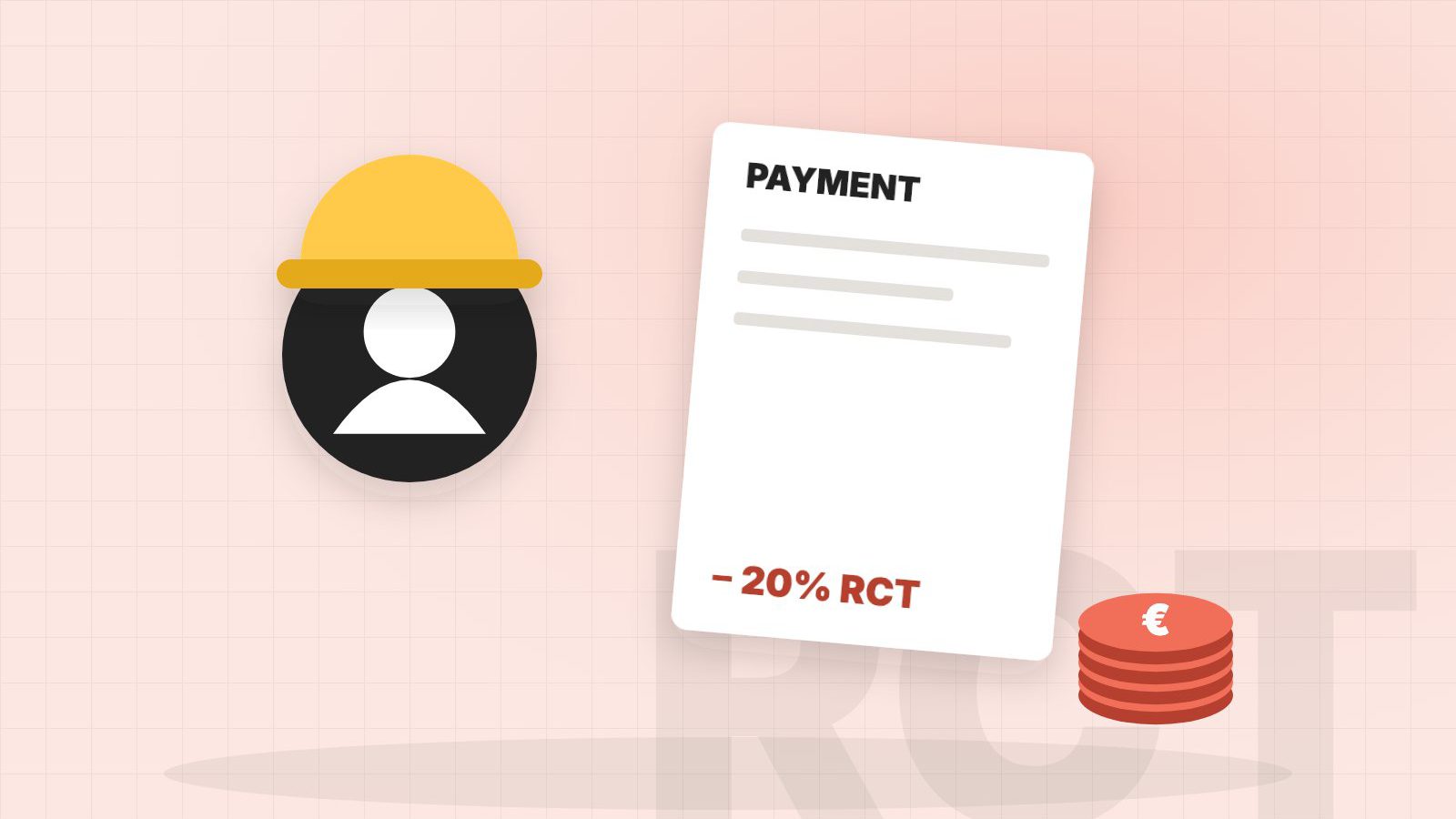
If you work as a subcontractor in construction, you have probably noticed that the principal contractor pays you less than the amount on your invoice. The difference is the RCT deduction, which the contractor pays to Revenue on your behalf. That money is not lost: for a subcontractor, the RCT deduction is tax you have already paid, and it can be credited against your tax if you keep proper track of it.
How an RCT deduction arises
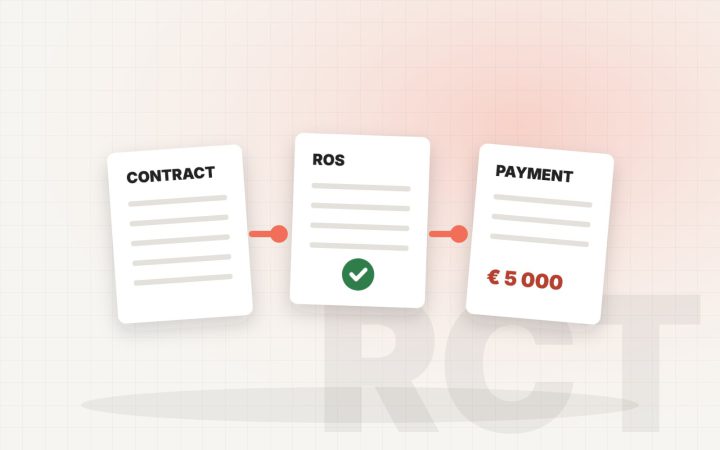
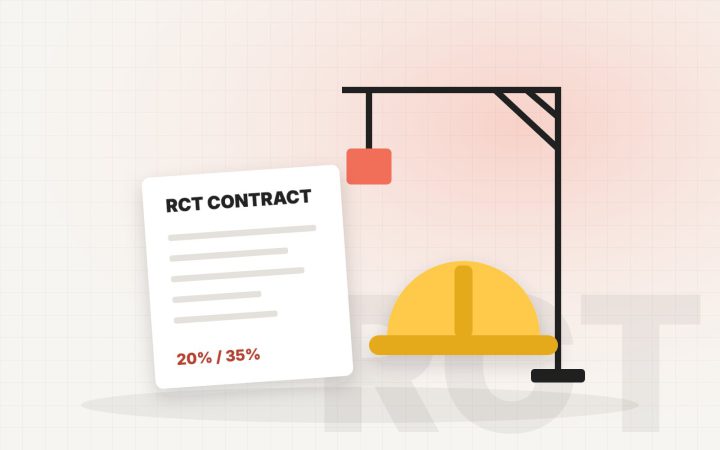
RCT (Relevant Contracts Tax) applies in the construction, forestry and meat processing sectors. Before paying you, the principal contractor notifies Revenue of the payment through ROS, and Revenue tells them which rate to apply. At present the rates are:
- 0% – for subcontractors Revenue has given this rate because of a good tax compliance record;
- 20% – for subcontractors registered with Revenue with a satisfactory compliance record;
- 35% – where the subcontractor is not known to Revenue or has serious compliance problems.
You can see your rate in ROS (Revenue Online Service). If it looks wrong, first find out why – most often it is because of returns not filed or tax not paid. You will find a description of the system in our article how RCT works in Ireland.
Which documents to keep
So that you can claim credit for the deductions, or challenge them if needed, keep:
- contracts, or at least a written agreement for the work, with each contractor;
- the invoices you issued (gross amount, without VAT if the reverse charge applies);
- bank statements showing the net amounts you received;
- copies of the deduction authorisations, which the contractor must give you whenever they deduct tax.
Deductions made on your behalf can also be seen in ROS. Compare regularly whether the amounts in ROS match your own documents. If a contractor has made a deduction but it does not appear in ROS, speak to the contractor as soon as possible.
It helps to keep a simple summary for each contractor: invoice number, date, gross amount, RCT deducted and amount received. At year end, a table like this lets you compare your figures with ROS in a few minutes, instead of searching for documents across phones and emails.
How the RCT deduction looks in your books
In your books, each invoice to a contractor is recorded as income at the full amount. The net amount received is recorded as a bank receipt, and the RCT deducted as a tax credit – an amount Revenue has already received on your behalf. That way, at year end you can clearly see how much you earned, how much reached your bank and how much tax has already been paid.
A common situation is that a subcontractor only sees the bank receipts in their records and thinks that is their income. The RCT credit then “gets lost”, income on the return is understated, and Revenue’s figures do not match yours. Mismatches like this are often what triggers questions from Revenue.
Claiming the RCT deduction at year end
The key principle: your income is the gross invoice amount, not the net amount you received. The RCT deducted is tax already paid, which is credited against your tax liabilities.
For a Sole Trader subcontractor
Deductions are usually credited against your income tax for the year when you file Form 11, the annual self-assessment return. If the deductions are more than the tax you owe, the overpayment can be refunded, provided your tax affairs are in order.
For a Limited Company subcontractor
For a company, deductions can be offset against Corporation Tax and other tax liabilities, and in certain cases a refund can be claimed before the end of the year. The conditions depend on the company’s situation, so it is worth discussing them with an accountant.
A practical example
Example (illustrative, simplified): a Sole Trader subcontractor issued invoices worth €30,000 over the year. The contractors applied the 20% rate, so €6,000 was deducted and €24,000 reached the bank account.
- On Form 11, income is declared as €30,000, not €24,000.
- After allowable expenses, Income Tax, USC (Universal Social Charge) and PRSI (social insurance contributions) are calculated.
- The €6,000 RCT credit is deducted from the calculated liability.
- If the liability is less than €6,000, the rest may be refunded; if it is more, only the difference is paid.
The figures here only illustrate the logic – your actual liability depends on your expenses, credits and other income.
Remember too that the self-employed are subject to Preliminary Tax – an advance payment of tax for the current year. If most of your income comes through RCT, it is important to know how the deductions relate to Preliminary Tax in your case. It is worth discussing this with your accountant before the deadline, so that you neither overpay nor pay late.
Common mistakes
- Declaring the net amount received rather than the gross invoice amount.
- Not filing Form 11 because “the tax has already been deducted” – so the credit and any possible refund get stuck.
- Not checking whether the deductions shown in ROS match the money received.
- Neglecting tax compliance, so the rate goes up to 35%.
- Charging VAT on an invoice to a principal contractor when the reverse charge should apply.
When to get help
It is worth getting help when you work for several contractors, when contracts are complicated, when your rate changes unexpectedly or when Revenue asks about mismatches. Questions like these are cheaper to sort out before a letter from Revenue arrives. If you have overpaid tax in previous years, see tax refunds in Ireland.
Quick answers
Can I get my RCT deductions back without filing an annual return?
For a Sole Trader, deductions are usually credited through Form 11, so it cannot be done without a return.
How do I find out how much RCT has been deducted from me?
Log in to ROS and review the RCT deduction details, then compare them with the deduction authorisations your contractors gave you.
Can I get the 0% rate?
Revenue sets the rate based on your tax compliance history. Filing returns and paying tax on time is the main condition.
For a subcontractor, the RCT deduction is your money, and it comes back through proper bookkeeping and a tax return. Check the current rules on revenue.ie.
If you need help with your own situation, see our RCT in Ireland service or get in touch.
This article provides general information, not individual tax advice. Rules change — talk to us about your own situation or check the official Revenue information.