When you start a business with a friend, relative or colleague, it is natural to think about working together without setting up a company. A partnership in Ireland lets you do that, but it has its own registration and filing rules – and a spoken “we split it 50/50” with nothing on paper often ends in disputes and double work.
What is a partnership in Ireland
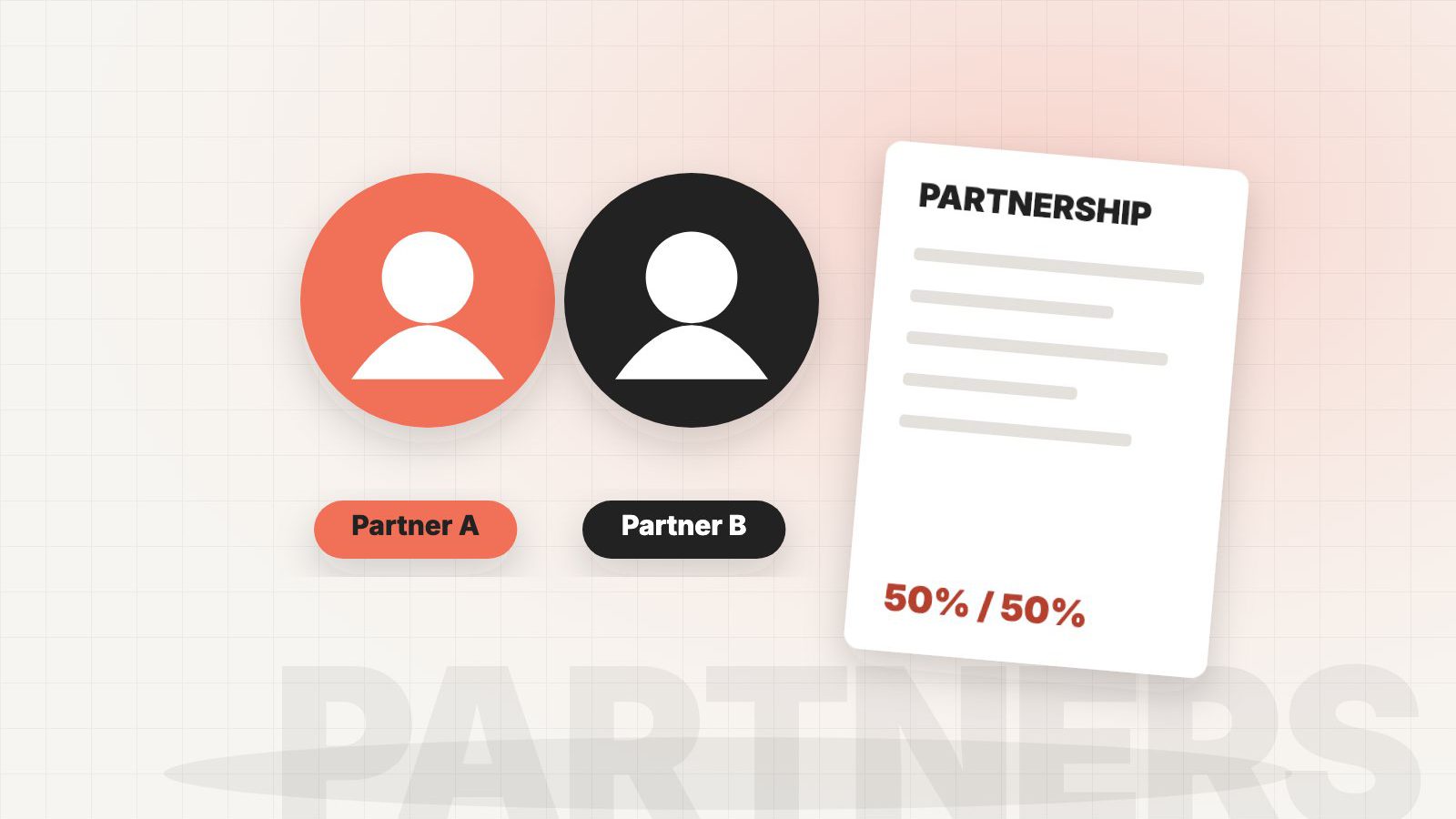
A partnership is two or more people carrying on a business together with a view to profit. An ordinary partnership is not a separate legal entity in the way a Limited Company is. That means a few important things:
- profit is taxed not at the level of the partnership but at the level of each partner – according to their share;
- partners are usually liable for the partnership’s debts with their personal assets too, and one partner may also have to answer for another partner’s actions on behalf of the business;
- a partnership can exist in fact, even if nobody has signed any agreement.
That last point surprises many people: if you work together and share income and expenses, Revenue and the courts may treat you as partners.
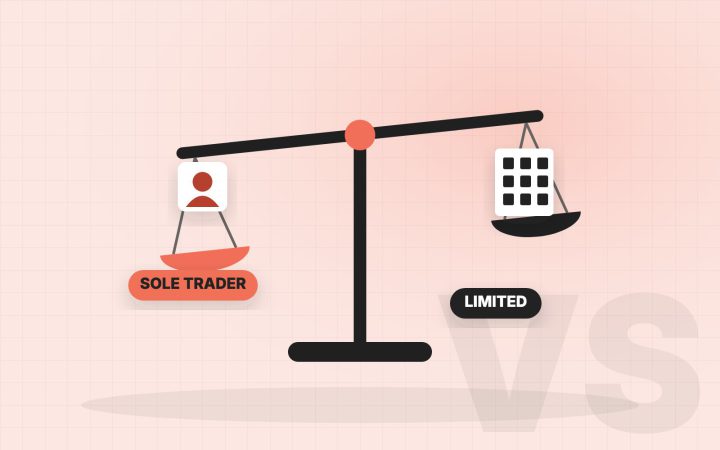
So before you start working together, it is worth deciding deliberately which structure you will use: each of you as a separate Sole Trader invoicing the other, or a partnership with shared income. Registration, invoicing, the bank account and tax returns all depend on this choice.
Registration and structure
Before you start trading, it is worth sorting out three things.
Registering with Revenue
A partnership is registered with Revenue and gets its own tax reference number for filing the partnership return, but income tax on the profit is paid by each partner, not by the partnership itself. So each partner also needs to be registered as self-employed in their own name. If the business requires it, the partnership also registers for VAT or as an employer (payroll). The partners appoint one person – the precedent acting partner – who is responsible for the partnership return and for dealing with Revenue.
Business name with the CRO
If you trade under a made-up name rather than your own surnames, you usually need to register it as a business name with the CRO (Companies Registration Office).
Partnership agreement
A written agreement is not mandatory, but it is strongly recommended. It usually covers:
- how profits and losses are shared (not necessarily equally);
- who contributes how much money, equipment or work;
- who can sign contracts and operate the bank account;
- what happens if a partner wants to leave, falls ill or dies.
The agreed profit-sharing arrangement must also be reflected in the accounts and in the tax returns. If the agreement says one thing and the bank shows something else, questions follow.
When the partners change – someone joins or leaves – this needs to be put in writing, the Revenue registrations updated and that year’s profit allocated correctly. Leaving can also have other tax consequences, for example if a partner sells their share in the business assets.
Tax returns: the partnership and the partners
A partnership has a two-level reporting logic:
- The partnership return. The precedent acting partner files the partnership’s annual return, Form 1 (Firms), showing the overall result of the business and how it is split between the partners.
- Each partner’s return. Each partner files their own personal Form 11 return showing their share of the profit, and pays their own income tax, USC (Universal Social Charge), PRSI (social insurance) and Preliminary Tax.
The figures in both returns must match. If the partnership’s books are kept badly, the corrections have to be made in several people’s personal returns too – so chaos quickly turns into double work. Check the deadlines on revenue.ie every year. We cover self-employed obligations in more detail in our article Tax for the self-employed.
Example: two partners, unequal shares
Example (simplified). Two partners do renovation work together. Their agreement says profit is split 60/40, because one of them brought in the equipment and works more hours. Over the year, the partnership’s income is €120,000, allowable business expenses are €50,000, and the profit is €70,000.
- Form 1 (Firms) shows the €70,000 profit and how it is allocated.
- The first partner declares €42,000 on their Form 11, the second €28,000.
- Each pays tax on their share according to their own personal situation (credits, other income).
Without an agreement, if the partners could not agree how to split the profit, filing would stall and the dispute could become a legal one.
When a Limited Company is the better choice
A partnership is simpler to set up, but it is not always the best choice. A Limited Company is worth considering when:
- the business carries high risk and you want to limit personal liability;
- profits are high and you plan to keep part of them in the business;
- you intend to bring in investors or new shareholders.
A company’s trading profit is currently taxed at the 12.5% Corporation Tax rate (check revenue.ie), but taking money out of the company brings other taxes, and company accounts and filings are more complex. It is an individual decision – you’ll find a comparison in our article Sole Trader or Limited Company.
Common mistakes
- Working together without any written agreement.
- Mixing partnership income and expenses with personal bank accounts.
- Each partner declaring “their own” income separately, as if they were a Sole Trader, with no partnership return filed.
- Not telling Revenue when the partners change.
Quick answers
Can spouses be partners?
Yes, if both genuinely take part in the business. It is important that the profit split reflects each person’s real contribution and is properly documented.
Does a partnership need its own bank account?
Legally it is not always required, but in practice a separate account makes the bookkeeping much easier and protects against disputes.
Can a partnership later become a company?
Yes, but transferring the business to a company has tax consequences that need to be assessed in advance.
A well-planned partnership in Ireland can be a simple way to start a joint business – as long as from day one you have an agreement, clear bookkeeping and you know who is responsible for what.
If you need help with your own situation, see our accounting services in Ireland or get in touch.
This article provides general information, not individual tax advice. Rules change — talk to us about your situation or check the official Revenue information.